The bathroom is often the most dangerous room in the house. Slippery surfaces, tight spaces, and hard fixtures create a perfect storm for accidents, especially for seniors or individuals with mobility challenges. For many, maintaining independence means rethinking how this essential space functions.
Creating a safe, accessible bathroom isn’t just about installing a grab bar and calling it a day. It requires a thoughtful approach to design, understanding specific needs, and selecting the right fixtures that comply with the Americans with Disabilities Act (ADA) standards. Whether you are modifying a home for aging in place or accommodating a family member with a disability, the right tools make all the difference between a hazardous environment and a safe haven.
This guide explores the essential fixtures and tools required for a functional accessible bathroom. We will look at how modern design has caught up with functionality, ensuring that safety doesn’t have to look institutional.
Key Takeaways
- Safety starts with entry: Widening doorways and eliminating thresholds are the first steps in creating an accessible space.
- Fixture height matters: Toilets, sinks, and showers must be installed at specific heights and clearances to accommodate wheelchair users and reduce strain.
- Professional installation is crucial: Proper adherence to ADA guidelines ensures safety and functionality, requiring the expertise of a specialized contractor.
The Foundation: Access and Flooring
Before discussing fixtures, we must address the “bones” of the room. An ADA Bathroom Conversion begins with getting into the room safely.
Doorways and Thresholds
Standard bathroom doors are often too narrow for wheelchairs or walkers. ADA guidelines generally recommend a clear width of at least 32 inches when the door is open 90 degrees. This often means installing offset hinges (which swing the door clear of the frame) or widening the doorway structure entirely.
Once through the door, the floor transition is critical. Traditional bathrooms often have raised thresholds that pose tripping hazards. A zero-threshold entry creates a seamless transition from the hallway to the bathroom, eliminating barriers for wheeled mobility devices.
Slip-Resistant Flooring
Water and smooth tiles are a dangerous combination. For accessibility, flooring needs a high coefficient of friction. Textured tiles, vinyl, or other slip-resistant materials are essential. Rugs should generally be avoided unless they are non-slip and low-profile to prevent tripping or tangling with wheelchair wheels.
The Toilet Area: Height and Support
The toilet is a primary area of concern for falls. Standard toilets are often too low, making sitting down and standing up difficult for those with limited leg strength or balance issues.
Comfort Height Toilets
An ADA-compliant toilet, often called “Comfort Height” or “Chair Height,” stands 17 to 19 inches from the floor to the top of the seat. This added height makes transfers from wheelchairs easier and reduces the effort required to stand up.
Grab Bars: The Unsung Heroes
Grab bars are perhaps the most critical safety feature. They must be anchored securely into the wall blocking, not just drywall, to support significant weight.
- Rear Wall Bar: Located behind the toilet, usually 36 inches long.
- Side Wall Bar: Located on the adjacent wall, usually 42 inches long.
Modern grab bars come in various finishes like brushed nickel, bronze, and matte black, moving away from the sterile, hospital-like chrome bars of the past.
The Vanity: Sink Accessibility
For a bathroom to be truly usable, the sink area requires specific clearances. A standard vanity cabinet blocks wheelchair access, forcing the user to approach the sink from the side—an awkward and unsafe position.
Wall-Hung or Pedestal Sinks
Wall-hung sinks are the gold standard for accessibility. They provide open space underneath (knee clearance) allowing a wheelchair user to roll directly up to the basin. The top of the sink or counter should be no higher than 34 inches above the floor.
Faucet Controls
Dexterity issues can make turning round knobs impossible. ADA-compliant faucets use lever handles that can be operated with one hand and do not require tight grasping or twisting. Touchless motion-sensor faucets are an even better upgrade, removing the need for physical manipulation entirely.
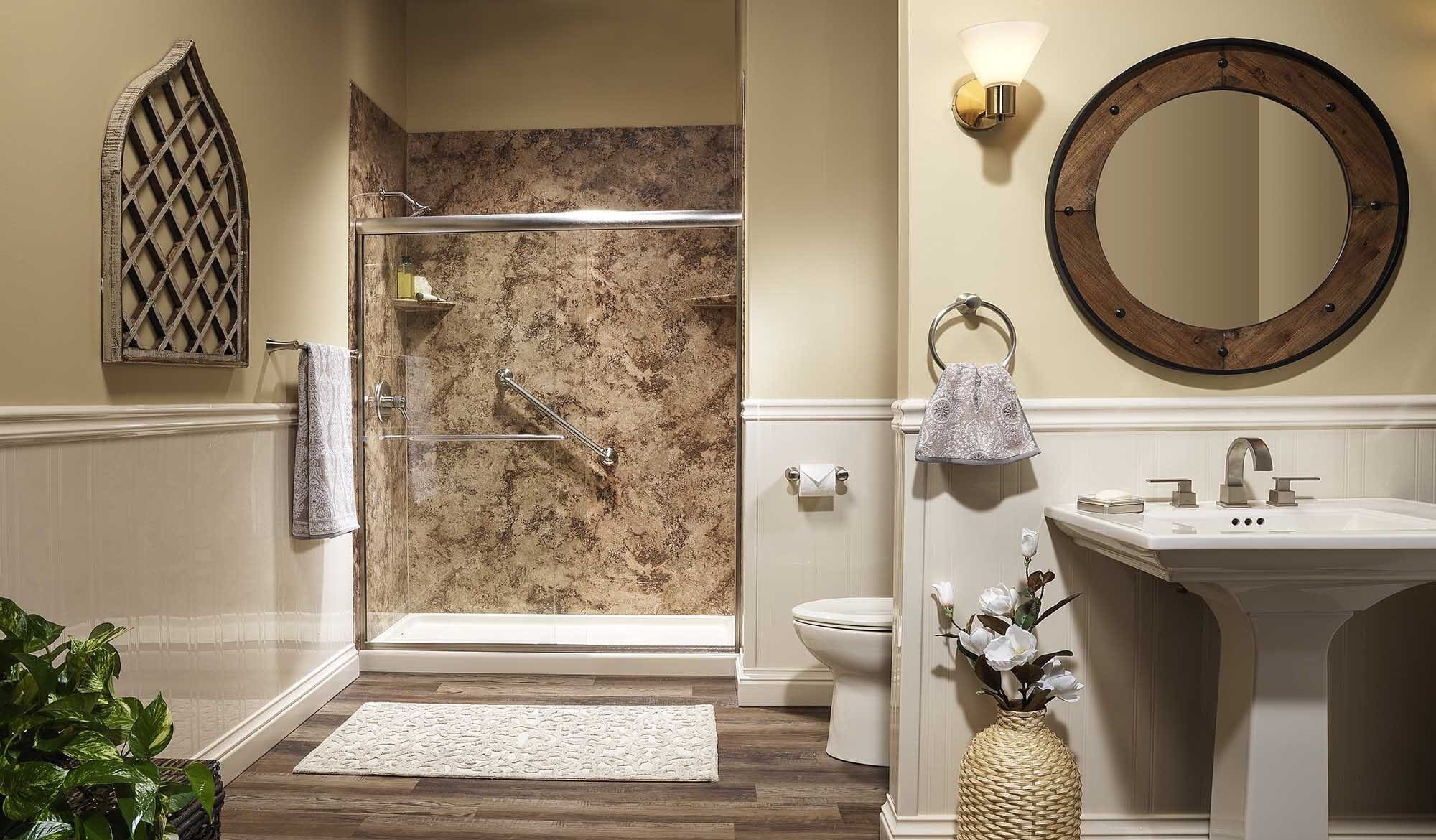
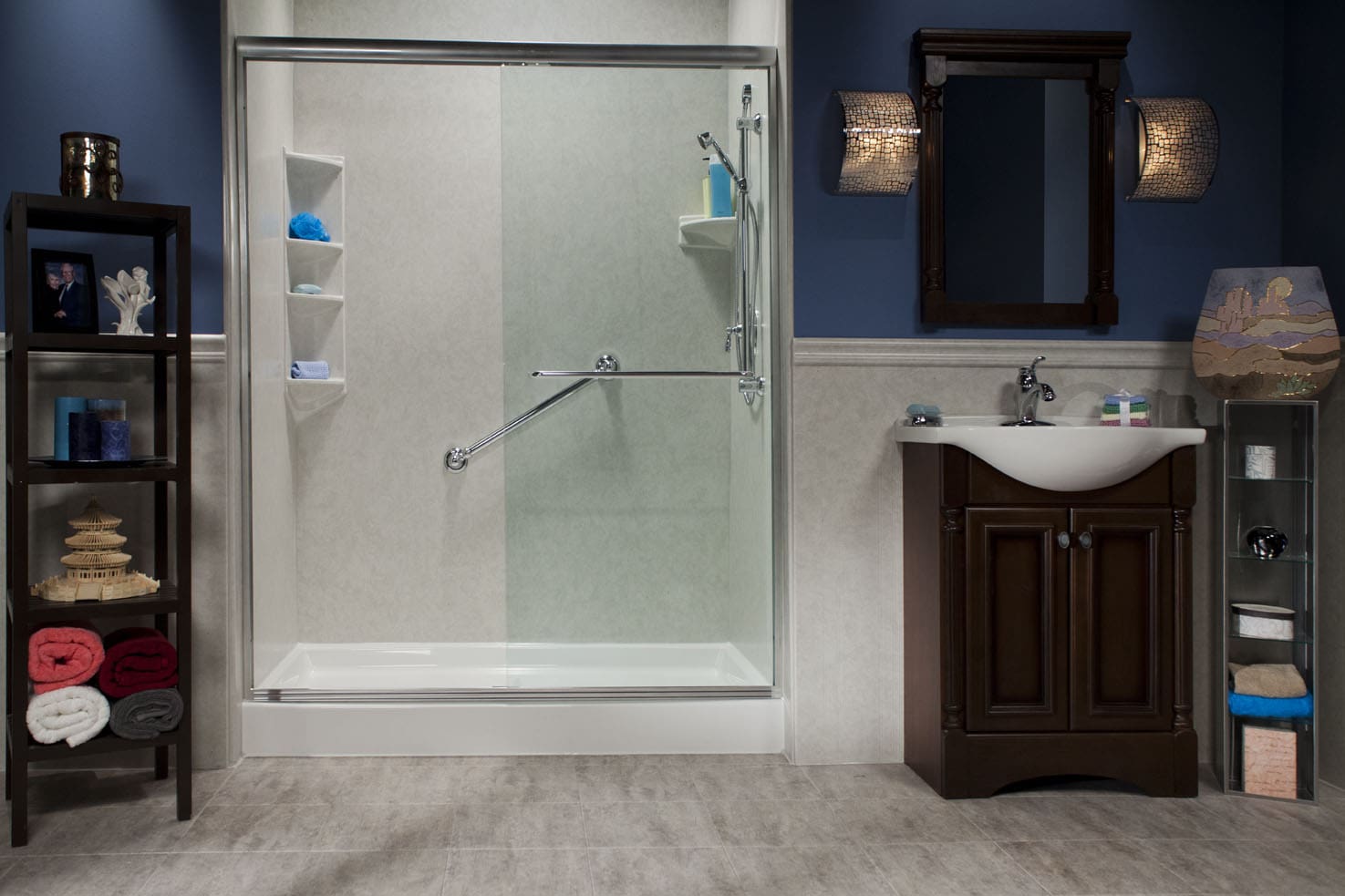
The Shower: Barrier-Free Bathing
The shower is the heart of an ADA Bathroom Conversion. Traditional tub-shower combos require stepping over a high wall, which is often impossible for those with mobility restrictions.
Curbless Showers
A curbless (or roll-in) shower has no lip at the entry. The floor slopes gently toward the drain, keeping water contained while allowing a wheelchair or walker to roll right in. This open design also makes the bathroom feel larger and more luxurious.
Shower Seats and Handheld Sprays
Standing for the duration of a shower can be fatiguing or dangerous. A built-in or folding shower bench provides a secure place to sit. When paired with a handheld showerhead on a slide bar, the user can bathe independently while seated, controlling the water flow and direction with ease.
Why Professional Installation Matters
While DIY home improvements are popular, accessibility modifications carry a higher stake. An improperly installed grab bar that pulls out of the wall during a fall can cause catastrophic injury. Furthermore, understanding the precise turning radius required for a wheelchair (usually 60 inches) involves complex spatial planning.
This is why hiring a qualified Bathroom Contractor New Britain CT is essential. Experienced contractors understand the nuances of local building codes and ADA guidelines. They know how to reinforce walls for grab bars, how to properly slope a floor for a curbless shower, and how to reconfigure plumbing for accessible sinks.
At Inaugural Home Improvement, we specialize in transforming standard bathrooms into safe, functional, and beautiful accessible spaces. We understand that your needs are unique, and we tailor our renovations to support your independence.
Making the Change
Investing in accessibility is investing in the future usability of your home. It allows you or your loved ones to maintain dignity and independence in one of the most private spaces of the house. With the right planning, fixtures, and professional help, you can create a bathroom that is safe for everyone, regardless of mobility level.
Don’t wait for an accident to happen before making necessary changes. Assess your current space, identify the hazards, and consider which of these tools and fixtures would best serve your household’s needs.