Quick answer: A wheelchair accessible bathroom layout needs at least a 60-inch turning radius, a roll-in shower with no threshold, grab bars near the toilet and shower, and a wall-mounted sink with knee clearance. Smart placement of fixtures ensures safe, independent use for wheelchair users.
Bathrooms can be one of the trickiest rooms to navigate for anyone using a wheelchair. Tight corners, narrow doorways, and fixtures placed without accessibility in mind can turn a daily routine into a daily struggle. The good news? With thoughtful planning, you can create a space that’s both safe and comfortable.
At Inaugural Home Improvements, we’ve helped countless homeowners rethink their bathrooms with accessibility front and center. In this guide, we’ll walk you through everything you need to know to design a wheelchair accessible bathroom layout—from clearances and fixtures to finishing touches that make all the difference.
Key Takeaways
- A successful wheelchair accessible bathroom layout requires a 60-inch turning radius, a zero-threshold roll-in shower, and properly placed grab bars for safety and independence.
- Fixtures like wall-mounted sinks, comfort-height toilets, and lever-style faucets make daily routines easier and more comfortable.
- Working with an experienced contractor ensures your bathroom meets ADA guidelines while suiting your specific needs.
Why does bathroom accessibility matter?
For wheelchair users, an inaccessible bathroom isn’t just inconvenient—it can be dangerous. Slippery surfaces, hard-to-reach fixtures, and cramped spaces increase the risk of falls and injuries. According to the CDC, falls are the leading cause of injury among older adults, and many of these happen in the bathroom.
A well-designed accessible bathroom restores independence and dignity. It allows people to manage their personal care without relying on others, while giving family members peace of mind. Plus, accessible design adds long-term value to your home, making it suitable for guests and future residents of all abilities.
What clearances does a wheelchair accessible bathroom layout need?
Space is the foundation of any accessible bathroom. Without enough room to move, even the best fixtures become useless.
Turning radius
A wheelchair user needs a clear floor space of at least 60 inches in diameter to make a full 360-degree turn. This open space should be free of fixtures, cabinets, and other obstacles. If a full turning circle isn’t possible, a T-shaped turning space can be an alternative.
Doorways and entrances
Standard doorways are often too narrow. For wheelchair access, aim for a doorway width of at least 32 inches when the door is open. A clear width of 36 inches is even better. Consider swapping a swinging door for a pocket door or sliding door to save space.
Fixture clearances
Each fixture needs surrounding space to be usable. For example, the toilet should have at least 48 inches of clear floor space in front and to the side for safe transfers.
What fixtures make a bathroom wheelchair accessible?
Choosing the right fixtures is just as important as getting the layout right. Here are the essentials.
Roll-in shower
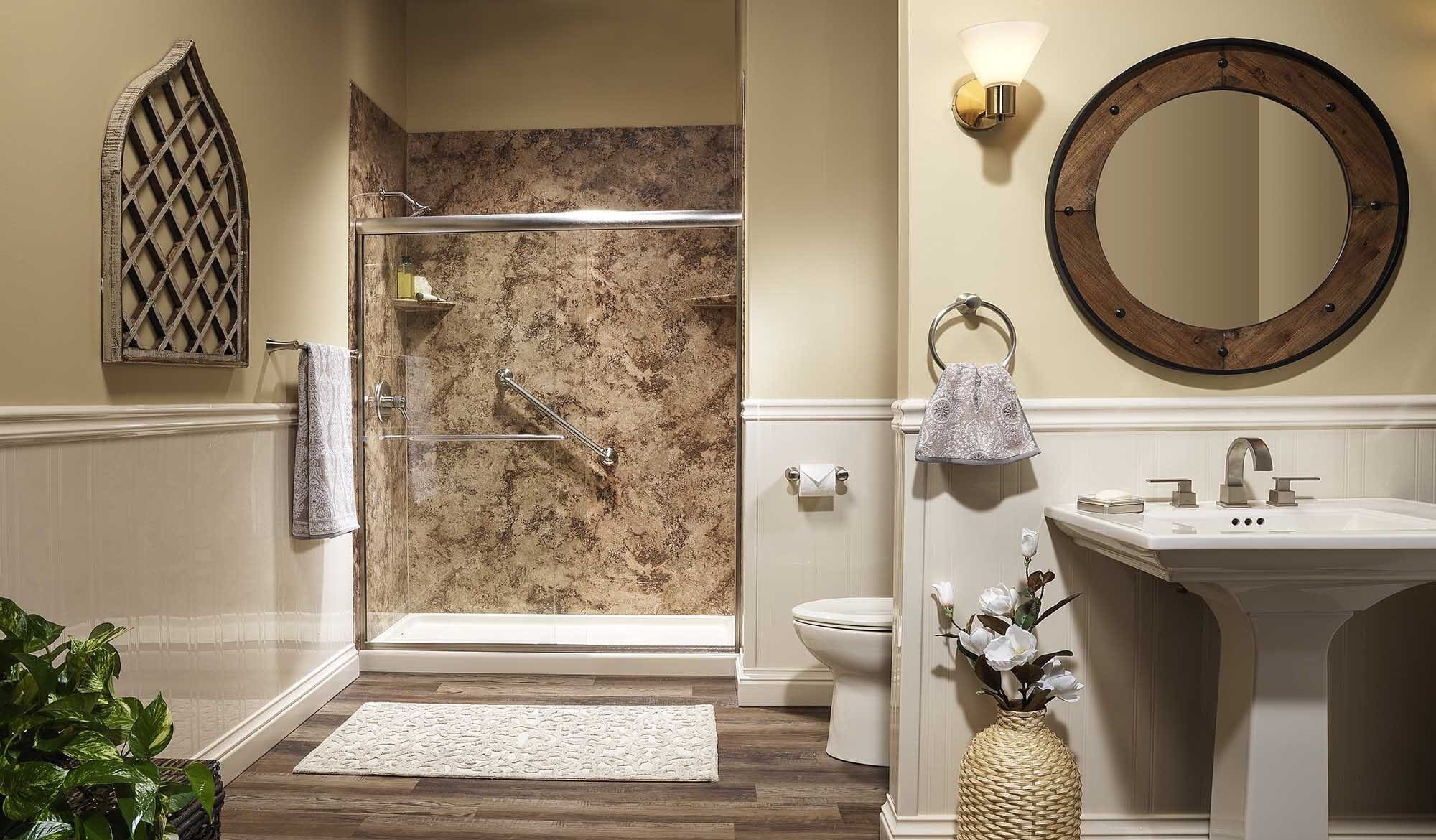
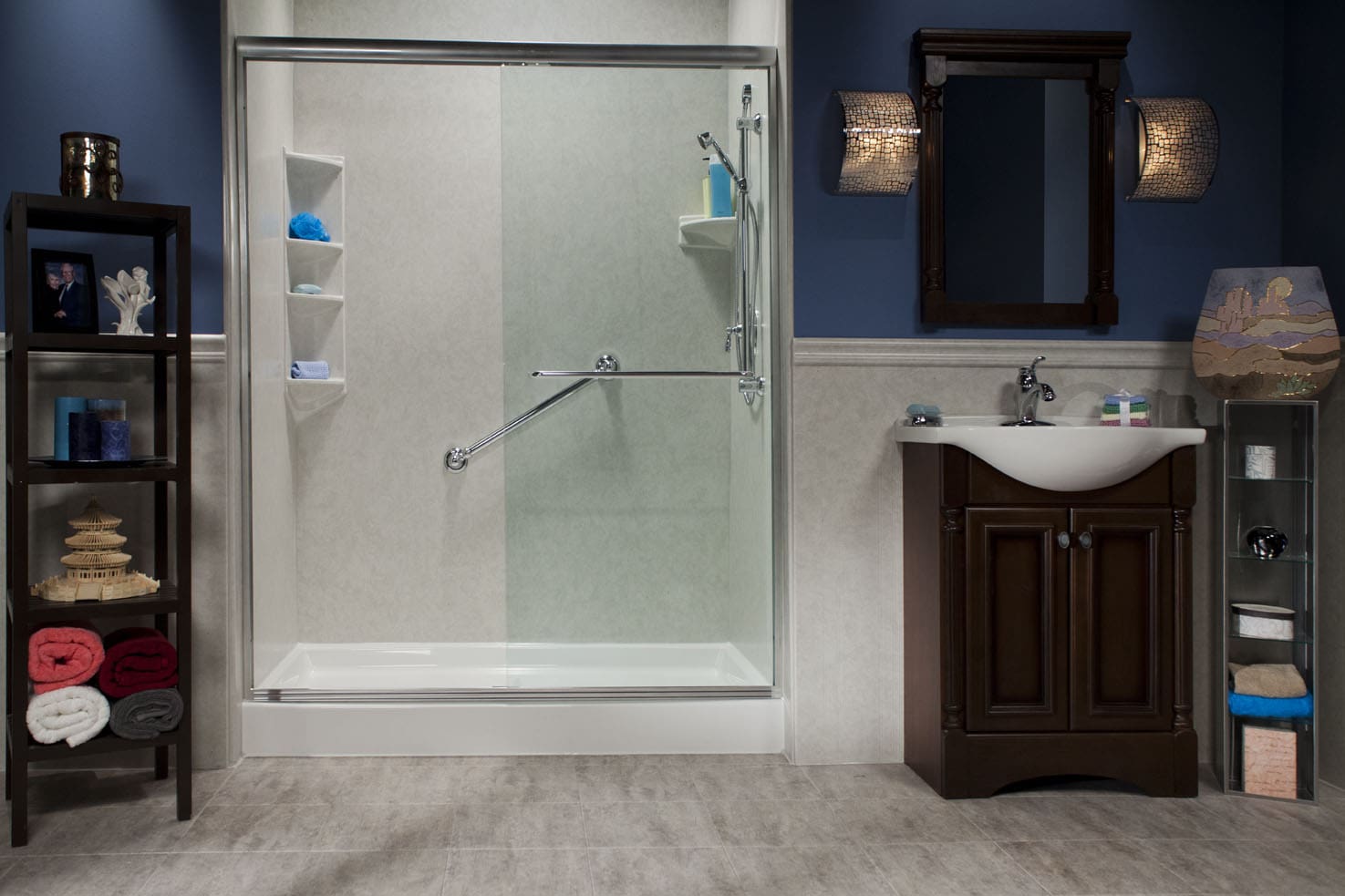
A zero-threshold, roll-in shower lets a wheelchair or shower chair enter without any lip or step. Aim for a minimum size of 60 by 30 inches. Include a handheld showerhead, a fold-down bench, and grab bars for added safety and convenience.
Comfort-height toilet
A comfort-height toilet sits between 17 and 19 inches off the floor, making transfers from a wheelchair easier. Pair it with grab bars on the wall and beside the toilet for extra support.
Wall-mounted sink
A wall-mounted or floating sink offers knee clearance underneath, so wheelchair users can roll right up. Position the sink no higher than 34 inches from the floor, and insulate any exposed pipes to prevent burns.
Grab bars
Grab bars are non-negotiable in an accessible bathroom. Install them near the toilet and inside the shower. They should be mounted securely into wall studs and able to support at least 250 pounds.
Lever-style faucets and handles
Lever-style or touchless faucets are easier to operate than traditional knobs, especially for people with limited hand strength or dexterity.
What are some finishing touches for accessibility?
Once the major elements are in place, a few thoughtful details can elevate both safety and comfort:
- Non-slip flooring: Choose textured tiles or slip-resistant vinyl to reduce the risk of falls.
- Good lighting: Bright, even lighting helps everyone see clearly and move safely.
- Accessible storage: Place shelves, towel racks, and toiletries within easy reach from a seated position.
- Mirror placement: Mount mirrors lower or angle them so they’re usable from a seated height.
Bringing your accessible bathroom to life
Designing a wheelchair accessible bathroom layout comes down to three things: enough space to move, fixtures that support independence, and finishing touches that prioritize safety. When these elements come together, the result is a bathroom that works beautifully for everyone who uses it.
Ready to transform your space? The team at Inaugural Home Improvements specializes in accessible bathroom renovations tailored to your needs. Get in touch today for a consultation, and let’s build a bathroom that gives you comfort, safety, and independence for years to come.
Frequently asked questions
How much space do you need for a wheelchair accessible bathroom?
You need a minimum 60-inch turning radius for a full wheelchair turn, doorways at least 32 inches wide, and 48 inches of clear floor space in front of key fixtures like the toilet.
How much does a wheelchair accessible bathroom remodel cost?
Costs vary based on the size of the space, the fixtures you choose, and the extent of structural changes. A basic accessibility upgrade is less expensive than a full remodel. Contact a contractor like Inaugural Home Improvements for an accurate quote based on your specific project.
What is the difference between a roll-in shower and a curbless shower?
The terms are often used interchangeably. Both feature a zero-threshold entry with no step or lip, allowing a wheelchair or shower chair to roll directly in. The key feature is the seamless, level transition from the bathroom floor into the shower.
Do accessible bathrooms have to meet ADA guidelines?
ADA guidelines are legally required for public and commercial spaces. For private homes, they’re not mandatory but serve as an excellent design standard to ensure safety and usability. An experienced contractor can help you apply them to your home.